
Picking out a Ferrule Crimping Tool isn’t just about tweaking prices, jaw shapes, or bouncing between online reviews. When it comes to global buyers, what really matters are things like consistent compression, precise sizing, tough materials, and that reliable after-sales support. You might pick up a tool that feels solid in your hand, but if it starts producing loose ferrules after a few uses, that’s a big no-go. Little details like that really count, you know?
Daniel Mercer, an independent expert with over 20 years of hands-on experience in electrical tools, mentions, “A good crimp isn’t judged by how it feels, but by the connection it makes.” Honestly, that’s a pretty down-to-earth truth. The ideal Ferrule Crimping Tool should deliver a tight, repeatable connection without messing up the conductor or the ferrule itself. When you’re shopping around, make sure to check out its wire range compatibility, the crimp profile, ratchet mechanism, jaw alignment, and how well it can handle repeated cycles.
It’s the little things that matter the most.
For teams shopping from different countries, it’s a smart move to test out samples with actual ferrules and stranded wires. Sometimes, a square crimp will do the trick for certain terminal blocks, but other times a hexagonal shape might fit better. Features like insulated handles, ergonomic grips, or a controlled release can make long shifts less exhausting for operators. But hey, just because a tool is comfy to hold doesn’t automatically mean it’s gonna perform well.
This guide puts together some of the top Ferrule Crimping Tools out there—aimed at distributors, electrical contractors, panel builders, and maintenance crews. We’re looking at real-world experience in the workshop, technical specs, consistent quality, and how reliable the suppliers are. Of course, some rankings are open to debate because regional preferences and specific job needs aren’t the same everywhere—that’s totally normal to acknowledge. No one tool is perfect for every workspace, cable size, or budget. So, the best way to choose is to go with tested samples, follow manufacturer recommendations, and always keep electrical standards in mind.
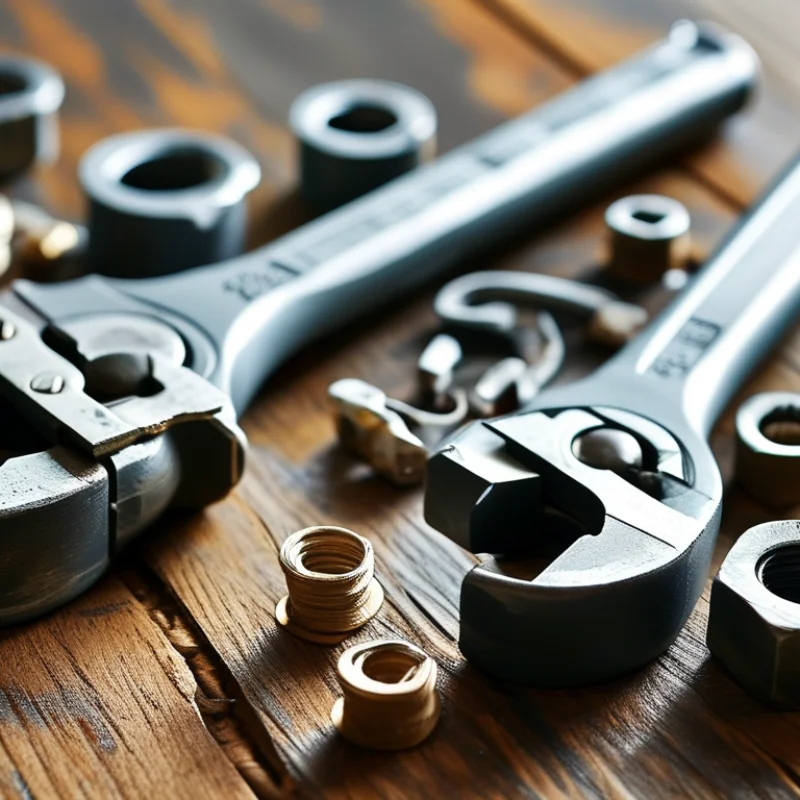
What Are Ferrule Crimping Tools and How Do They Work?
Ferrule crimping tools join stranded wire to an insulated sleeve, called a ferrule. The tool compresses metal evenly around the conductor. This creates a firm electrical and mechanical connection. A Crimper Ferrule tool usually includes shaped dies, handles, and sometimes a ratchet mechanism. The ratchet keeps the jaws closed until the crimp cycle finishes.
Professional installers normally strip the wire to the ferrule’s specified length. They insert every strand, then place the sleeve inside the correct die cavity. A square or hexagonal profile can improve contact inside a terminal block. The chosen profile must match the ferrule design.
IEC 60999-1 emphasizes reliable clamping connections and controlled conductor preparation. In practice, uneven stripping still causes failures. Tools cannot repair missing copper strands.
A 2024 industry analysis estimated the global hand tools market above 20 billion dollars, with electrical tools among its established segments. The report also identified durability and ergonomic design as important purchasing factors.
Buyers should verify crimp-range markings, die material, cycle consistency, and replacement-part access. A pull test on sample wires provides useful evidence, although it is not a substitute for certified testing.
A proper inspection checks exposed copper, sleeve deformation, insulation damage, and terminal fit. Small differences become expensive during high-volume assembly.
Key Features to Compare When Choosing a Ferrule Crimping Tool
Choosing a Ferrule Crimper starts with the wire sizes used in your daily work. Check its stated range, such as 0.25–6 mm², and compare it with your actual terminals. A tool may accept several sizes, yet produce uneven crimps near the range limits. Look for clearly marked die positions and a square crimp profile. The ferrule should grip the conductor firmly without cutting its sleeve.
A reliable ratcheting mechanism helps complete each cycle consistently. Test the release function before purchase. It should open smoothly if a wire is positioned incorrectly. Handle shape also matters during repetitive assembly. Soft, non-slip grips reduce pressure on the palm, while a compact head helps inside crowded control cabinets. I once used a tool with excellent force but poor balance. My hand noticed it before the specifications did.
Material quality deserves close inspection. Hardened steel jaws usually resist wear, but surface treatment and pivot construction also affect service life. Ask whether replacement parts, adjustment guidance, and inspection records are available. These details indicate practical support, not just attractive packaging. For professional purchasing, compare sample crimps under light pulling pressure and inspect the conductor entry. A good crimp looks even from every side. Still, visual checks are imperfect. Periodic testing is wiser than trusting one successful sample. Forgive small buying mistakes, but record them before ordering larger quantities.
Different Types of Ferrule Crimping Tools for Global Applications
Global wiring projects need more than one ferrule crimping method. The IEA Electricity 2024 report projected global electricity demand would rise by about 4% in 2024. It also expected average annual growth near 3.4% through 2026. More control panels, battery systems, and industrial equipment will require dependable terminations.
Manual ratchet tools suit maintenance teams and small panel batches. Their audible release helps prevent incomplete cycles. A self-adjusting Wire Ferrule Crimper handles several conductor sizes quickly, reducing die changes. Square-crimp tools create compact profiles for narrow terminal blocks. Hex-crimp models offer balanced pressure around larger ferrules. Pneumatic and battery-powered tools fit high-volume production, but their weight can increase operator fatigue. Hydraulic versions deliver strong compression for larger conductors, although they may be excessive for small cabinet wiring.
Tips: Match the tool to ferrule material, conductor class, and required crimp profile. Check DIN 46228 compatibility and verify the finished crimp with a pull test. A loose sleeve can expose copper strands. An overly tight crimp can damage them. Inspect dies after dusty field work. My practical view is less confident here: “universal” tools are convenient, but they do not always produce identical results across different ferrule batches. Record sample crimps before approving production.
Top Ferrule Crimping Tools for Global Buyers
Different types of ferrule crimping tools and their commonly used conductor-size ranges
| Category | Representative ferrule conductor range (mm²) |
|---|---|
| Manual fixed-die\nControl panels | 0.25 – 6 |
| Manual self-adjusting\nIndustrial wiring | 0.08 – 16 |
| Pneumatic\nProduction assembly | 0.25 – 16 |
| Hydraulic\nLarge power conductors | 10 – 50 |
The chart compares common ferrule crimping tool categories by representative conductor cross-section coverage. The ranges use standard metric wire-size increments commonly found in international control-panel, industrial automation, machinery, and power-distribution applications. Actual capacity depends on the die design, ferrule construction, and the tool specification.
How to Select the Right Tool for Wire Size and Ferrule Type
Top Ferrule Crimping Tools for Global Buyers
How to Select the Right Tool for Wire Size and Ferrule Type
Global electrical installations are expanding. The IEA Electricity 2024 report expects worldwide electricity demand to grow by about 4% annually through 2026. More control panels mean more small terminations, and small errors become expensive quickly.
Start with the conductor size, not the tool’s appearance. A tool marked 0.25–6 mm² should match the actual wire cross-section. Check both stranded wire and ferrule dimensions. DIN 46228 defines common ferrule requirements, including sleeve shape and conductor entry. Single ferrules suit individual wires. Twin ferrules fit two conductors, but the combined cross-section must remain within the tool’s rated range. Select the correct die profile, such as square or hexagonal, for the terminal design. A perfect-looking crimp can still hide loose strands.
Tips: Strip only the required length. The conductor should reach the ferrule barrel without exposed copper beyond the sleeve. Use a firm, even squeeze. Then perform a gentle pull test. For production work, record wire size, ferrule type, and crimp result. IEC 60228 conductor classes can help confirm the cable construction before testing. I have seen operators choose a wider tool range for convenience. It saved time at first, but inconsistent pressure followed. That shortcut deserves reconsideration. A narrower, calibrated tool often gives better repeatability. Keep sample crimps for inspection, especially when switching between flexible and highly flexible conductors.
Top Performance and Quality Factors for International Buyers
For global buyers, a High-Performance Ferrule Crimper must deliver consistent results across different work environments. Crimp quality depends on jaw alignment, pressure control, and material strength. A clean hexagonal or square crimp should hold the ferrule firmly without cutting conductor strands. The handle should remain stable during repeated use. Small movements matter.
International purchasing also requires practical quality evidence. Ask for material specifications, dimensional tolerances, inspection records, and calibration information. A hardened steel jaw may improve durability, but surface hardness alone proves little. Check whether the tool maintains pressure after hundreds of cycles. Test samples with common wire sizes before placing a large order. This step can reveal uneven compression or difficult release. Packaging also deserves attention, especially for long-distance shipping and humid storage conditions.
Tips: Confirm the supported ferrule range. Inspect the jaw after every sample test. Compare crimp results under low and high pressure. Keep photographs of approved samples. Ergonomic handles reduce fatigue, but comfort should not replace mechanical accuracy. A minor jaw mismatch can create hidden electrical risks. Even experienced buyers sometimes focus too heavily on price. That is worth reconsidering. Reliable suppliers should provide clear technical answers, stable production controls, and responsive support when specifications change.
Top Ferrule Crimping Tools for Global Buyers – Top Performance and Quality Factors for International Buyers
| Tool Category | Typical Conductor Range | Crimp Profile | Best Application | Key Performance Factor | Quality and Compliance Considerations | International Buyer Evaluation |
|---|---|---|---|---|---|---|
| Manual ratchet crimper | 0.25–6 mm² | Square or trapezoidal | Control cabinets, industrial wiring, maintenance work | Consistent compression with a full-cycle ratchet | Hardened steel dies, corrosion-resistant finish, insulated handles, replaceable or clearly marked dies | Confirm metric sizing, ergonomic suitability, and compatibility with the required ferrule standard |
| Precision square-profile crimper | 0.25–10 mm² | Four-sided square | Terminal blocks, circuit breakers, DIN-rail assemblies | Even contact on all four sides and reliable terminal insertion | Accurate die alignment, controlled jaw clearance, smooth ratchet release, stable dimensional tolerances | Suitable for applications requiring compact, uniform ferrule geometry |
| Hex-profile crimper | 0.25–16 mm² | Six-sided hexagonal | Power distribution, vibration-prone equipment, larger conductors | High holding strength and balanced radial compression | Robust frame, accurate die machining, high-load pivot, dependable return spring | Check conductor size range, ferrule wall thickness, and required pull-out performance |
| Self-adjusting crimper | 0.08–10 mm² | Automatic square or trapezoidal | High-mix production, electrical installation, service teams | Fast size changes without manual die selection | Self-adjustment mechanism must maintain repeatability; inspect calibration, jaw wear, and release control | Useful where operators handle multiple ferrule sizes, but verify adjustment range before purchase |
| Bootlace ferrule crimper | 0.25–6 mm² | Square, trapezoidal, or hexagonal | Stranded wire termination with insulated ferrules | Secure retention without cutting or deforming the sleeve | Smooth die surfaces, correct ferrule positioning, non-slip grip, clear size markings | Confirm compatibility with insulated and non-insulated ferrules used in the target market |
| Hydraulic ferrule crimper | 6–240 mm² | Hexagonal or interchangeable die profile | Large cables, switchgear, substations, heavy industrial installations | High compression force with reduced operator effort | Pressure relief, leak-resistant hydraulic system, die hardness, safety latch, and serviceable seals | Evaluate hydraulic certification, spare-part availability, die indexing, and transport requirements |
| Battery-powered crimper | Up to approximately 300 mm², model dependent | Hexagonal, indentation, or interchangeable | Repetitive field installation and high-volume cable assembly | Rapid cycle time and consistent force with low manual fatigue | Battery safety, overload protection, cycle monitoring, charger compatibility, and service documentation | Check regional battery transport rules, voltage systems, warranty support, and replacement battery supply |
| Pneumatic crimper | 0.5–16 mm², depending on tooling | Application-specific die profile | Automated or semi-automated production lines | High repeatability and low cycle variation | Stable air-pressure requirement, guarded moving parts, adjustable stroke, and easy maintenance access | Confirm factory air specifications, automation interfaces, noise limits, and installation requirements |
Safe Operation, Maintenance, and Quality Inspection Guidelines
Safe Operation, Maintenance, and Quality Inspection Guidelines
A ferrule crimping tool should feel stable before any wire enters its jaws. Inspect the handles, die, release mechanism, and insulation for visible damage. Keep fingers behind the guard area. Never force a conductor into an unsuitable ferrule size. The correct match prevents loose strands and uneven compression. Wear eye protection when cutting or trimming wire. Small metal fragments can travel farther than expected.
Clean the crimping dies after each production shift. A dry, lint-free cloth removes copper dust and residue. Do not apply excessive oil near the crimping surfaces. It may attract particles and affect grip. Store the tool closed in a dry cabinet. In practical workshops, many failures begin with rushed adjustments. I once overlooked slight die wear during a routine check. The crimp looked acceptable, but its pull resistance was inconsistent. That mistake changed our inspection routine.
Quality checks should include ferrule alignment, conductor visibility, and compression shape. The wire strands must remain fully inside the ferrule. A small inspection sample can reveal larger process problems. Use a calibrated pull test when reliable electrical connections are required. Record tool condition, ferrule size, operator, and inspection results. Compare samples from different shifts. Human judgment is useful, but it is not perfectly consistent. Recheck questionable crimps under bright, even lighting. A damaged die may still produce attractive results. Appearance alone is not proof of quality.
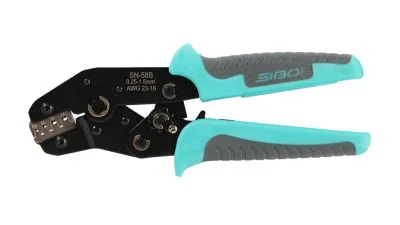
SIBO SN-58B Ratcheting Crimping Tool: Precision Connector Solutions for Dupont, JST, and Molex Wiring
The SN-58B Mini Euro-Style Terminal Crimping Pliers are designed for precise work in compact electronics assemblies, where connector accuracy and repeatability directly affect signal stability. A 2024 global connector-market report estimated the sector at approximately USD 84.5 billion in 2023, with projected growth to nearly USD 107 billion by 2028. This expansion reflects rising demand for dependable wiring solutions in computers, industrial controls, automotive electronics, and communication equipment.
With its ratcheting mechanism, the SN-58B maintains steady pressure through each crimp cycle, helping operators produce uniform connections without excessive hand force. Its compact profile is suited to crowded panels and field maintenance, while the precision die supports common open-barrel terminals used in 0.1-inch and micro-pitch wiring systems. It can also handle contacts for EPS, PCIe, and SATA-style power or data assemblies, making it useful for both prototype work and routine production.
According to recent electronics manufacturing assessments, automated and semi-automated assembly increasingly depends on consistent terminal preparation to reduce rework and improve throughput. The tool’s controlled crimping action helps position conductors and insulation correctly, supporting reliable pull strength and electrical continuity across repeated jobs. Its balance of professional performance, portability, and broad terminal compatibility makes it practical for technicians, repair specialists, and small-batch assembly teams.
FAQS
How do I choose a ferrule crimping tool for a specific wire size?
Match the tool with the conductor’s actual cross-section. Check stranded wire size, ferrule dimensions, and the tool’s rated range. A narrow, calibrated range may provide better consistency.
When should I use a square-crimp or hex-crimp profile?
Square crimps suit narrow terminal blocks and create compact finished shapes. Hex crimps distribute pressure around larger ferrules. Confirm the terminal design before selecting the profile.
Are manual ratchet tools suitable for small wiring projects?
Yes, manual ratchet tools suit maintenance work and small panel batches. Their audible release helps confirm a complete crimping cycle. They require more hand effort during long production runs.
When are pneumatic, battery-powered, or hydraulic tools appropriate?
Pneumatic and battery-powered tools fit high-volume production. Hydraulic tools provide strong compression for larger conductors. Their weight can increase fatigue, and hydraulic force may be excessive for small cabinets.
Can one universal tool handle every ferrule type?
Not reliably. Different ferrule batches may produce different results, even with one tool. Test sample crimps before production approval.
How should I prepare a wire before crimping?
Strip only the required length. The conductor should reach the ferrule barrel without copper extending beyond the sleeve. Keep every strand inside. Then apply a firm, even squeeze.
What safety checks should be completed before using the tool?
Inspect the handles, die, release mechanism, and insulation for damage. Keep fingers behind the guard area. Wear eye protection when cutting wire. Small metal fragments can travel farther than expected.
How can I inspect and maintain finished crimps?
Check ferrule alignment, compression shape, and conductor visibility under bright lighting. Use a calibrated pull test when connection reliability matters. Clean the dies with a dry, lint-free cloth after each shift. Appearance alone is not proof.
Conclusion
Ferrule Crimping Tool selection is essential for creating secure, reliable connections between wires and ferrules in electrical, industrial, automotive, and control applications. This guide explains how these tools work by compressing a ferrule evenly around the wire strands, improving conductivity, strain relief, and connection stability. It compares key features such as crimping profiles, adjustment options, handle comfort, durability, compatibility, and ease of use. It also introduces manual, ratcheting, hydraulic, and powered tool types for different working conditions and production needs.
For global buyers, choosing the right tool requires matching its capacity to the wire size and ferrule type while considering performance consistency, material quality, inspection requirements, and long-term maintenance. The guide also highlights safe operating practices, routine cleaning, calibration checks, and visual and mechanical quality inspections. By evaluating these factors carefully, users can select a dependable solution that supports efficient installation, repeatable results, and safe electrical connections across a wide range of applications.