
Picking out the best China-made Pin Terminal Crimper isn’t just about comparing prices, jaw shapes, or online reviews. You’ve gotta look at how consistently it crimps, whether it protects those tiny conductor strands, and if it fits the pin terminals you’re using. A good crimper should also feel stable, especially when you’re using it over and over again. The handles should close smoothly, without you having to squeeze too hard or feel it slipping suddenly.
Michael Chen, an independent engineer with over 15 years under his belt working with terminal tools, says, “A solid Pin Terminal Crimper leaves a nice, even crimp before your hand gets tired.” That little detail really matters. In the workshop, you can spot small differences pretty quick. If a terminal feels loose and slips out with just a gentle tug, that’s a no-go. On the flip side, over-crimping can damage the wire or mess up the insulation. Both of these issues shouldn’t be ignored — they can cause big headaches later.
In this guide, we take a close look at Chinese crimpers, testing them under real-world conditions—things like die precision, ratchet control, compatibility with different terminals, material quality, and how they hold up over time. We also check if the manufacturer offers clear specs, replacement parts, and good tech support. Some cheaper options actually work pretty well, while others might look nice but lose their alignment after a few hundred crimps—that’s where things get tricky. Just because a handle looks shiny doesn’t mean it’s well-engineered, and paying a high price definitely doesn’t guarantee a perfect crimp, either. We’ll dig into all these details, and honestly, one truth remains: even the best crimper can give you lousy results if you pick the wrong terminal size, wire gauge, or strip length. It’s all about using the right tool for the job.
What Is a China Pin Terminal Crimper?
What Is the Best China Pin Terminal Crimper?
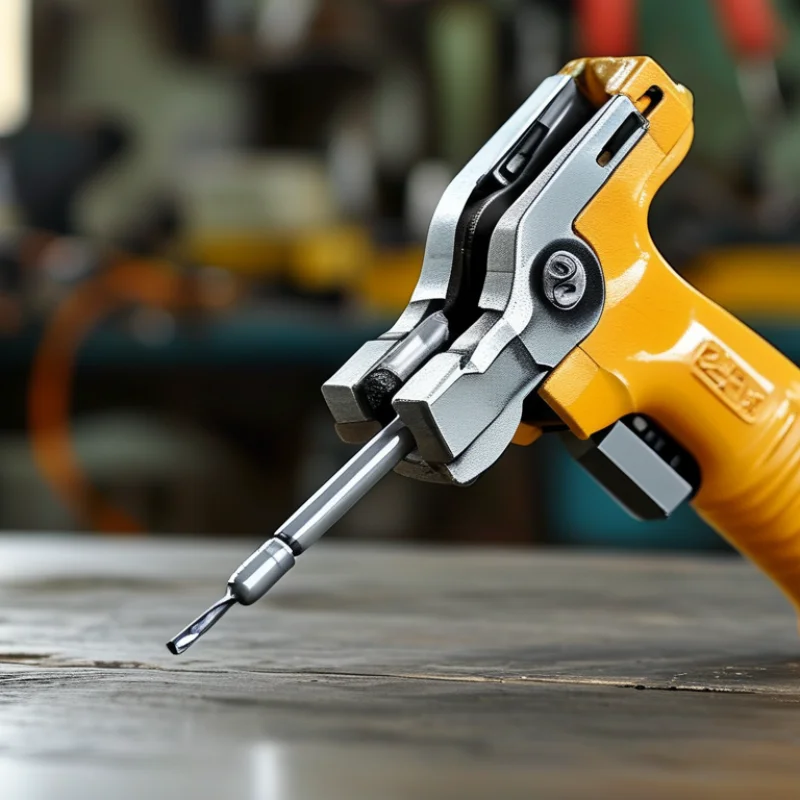
A China pin terminal crimper is a hand tool made in China for attaching pin terminals to stripped wires. Its die compresses the terminal barrel around the conductor. This creates a strong mechanical and electrical connection without solder. “China” describes the manufacturing origin, not one fixed tool design. Some models use interchangeable dies, while others fit one terminal size. Ratcheting handles help maintain repeatable pressure. That matters during repetitive assembly.
In workshop practice, I check four details: wire size markings, die alignment, ratchet release, and handle comfort. A correct crimp should show even compression, a visible conductor brush, and no cracked insulation. IPC/WHMA-A-620 provides widely used workmanship guidance for wire and cable assemblies. Its criteria help inspectors judge crimp shape rather than trust appearance alone. Not every good-looking crimp is reliable.
The market deserves attention. Grand View Research estimated the global wire harness market at about US$85 billion in 2023, with continued growth projected through 2030. More harness production increases demand for consistent terminal connections. A suitable crimper should match the terminal material, barrel profile, and wire gauge. Cheap tools can feel acceptable at first. Then the ratchet may drift. That weakness is easy to miss without a pull test or cross-section inspection. I would compare several samples, record the crimp height, and review the results before choosing the best China pin terminal crimper.
What Is the Best China Pin Terminal Crimper? – What Is a China Pin Terminal Crimper?
| Crimper Configuration | Typical Ferrule Range | Approx. Wire Size | Crimp Profile | Operating Method | Best-Suited Applications | Key Selection Consideration |
|---|---|---|---|---|---|---|
| Compact manual crimper | 0.25–2.5 mm² | 23–13 AWG | Square or four-sided | Manual ratchet | Control cabinets, terminal blocks, sensors, and small control wiring | Choose a model with a positive ratchet release and clearly marked wire-size positions |
| General-purpose ratchet crimper | 0.25–6 mm² | 23–10 AWG | Square, four-sided, or trapezoidal | Manual ratchet | Routine electrical assembly, machinery wiring, and maintenance work | The most versatile option when one tool must cover common insulated ferrule sizes |
| Twin-ferrule crimper | 0.5–6 mm² twin ferrules | 20–10 AWG combined capacity | Square or four-sided | Manual ratchet | Connecting two conductors into one terminal opening | Verify the die accepts the ferrule’s total cross-sectional area, not just one conductor size |
| Large-capacity manual crimper | 6–16 mm² | 10–6 AWG | Hexagonal or deep four-sided | Long-handle ratchet | Higher-current control panels, power distribution, and industrial equipment | Longer handles reduce hand force but increase tool size and working clearance |
| Interchangeable-die crimper | Typically 0.25–16 mm², depending on dies | 23–6 AWG | Square, hexagonal, or specialized profiles | Manual ratchet with replaceable dies | Workshops handling several ferrule styles and wire ranges | Check die availability, correct die alignment, and replacement cost before purchase |
| Pneumatic or hydraulic crimper | 6–35 mm² or larger, depending on tooling | 10–2 AWG or larger | Hexagonal or manufacturer-specific | Powered actuation | High-volume production and large-conductor assembly | Confirm required air pressure, hydraulic force, cycle rate, and compatible tooling |
| Fine-pitch precision crimper | 0.08–0.5 mm² | 28–20 AWG | Precision square or four-sided | Manual ratchet | Electronics, instrumentation, compact connectors, and low-current wiring | A narrow, accurately machined die is more important than maximum crimping force |
| Insulated-ferrule crimper | 0.5–6 mm² | 20–10 AWG | Profile matched to insulated ferrule collars | Manual ratchet | Applications requiring mechanical support around the insulation entry | Ensure the die compresses the metal barrel without damaging or cutting the plastic collar |
How Pin Terminal Crimpers Work
A pin crimper does not simply squeeze metal. It forms a controlled cold joint between a pin terminal and its conductor. When the handles close, matched dies compress the terminal barrel around the stripped wire. The pressure reshapes the barrel and removes small air gaps. A correct crimp holds firmly without cutting the copper strands.
For pin terminals, die geometry matters greatly. The smaller cavity supports the contact area, while the larger section grips the insulation. IPC/WHMA-A-620E identifies crimp height, conductor brush, bellmouth, and terminal position as key acceptance points. IEC 60352-2:2024 also uses mechanical pull-out and electrical resistance testing to verify connection quality. These checks explain why visual inspection alone is insufficient. A shiny crimp may still have weak internal contact.
The best China pin terminal crimper should offer stable die alignment, clear wire-size markings, and repeatable handle pressure. A ratcheting mechanism helps prevent early release. During bench inspection, measure crimp height with a suitable gauge, then perform a gentle pull test. Do not twist the terminal aggressively. That can hide a poor compression pattern. Small errors matter. A damaged strand, uneven barrel, or loose insulation grip can increase resistance and heat. I would also question tools that feel smooth but lack calibration records. Practical testing remains more reliable than appearance, especially across repeated production cycles.
Which Features Define the Best Crimper?
The best China pin terminal crimper is defined by control, not appearance. A reliable tool should produce even pressure around the terminal barrel. Uneven compression can loosen the wire or damage its strands. I look for hardened jaws with clean, precise profiles. They should match the pin size range clearly. Vague markings create avoidable mistakes.
Comfort matters during repeated work. A spring-assisted handle reduces hand fatigue, while textured grips prevent slipping. The ratcheting mechanism should release only after a complete crimp. That feature helps maintain consistent results, especially for beginners. However, the ratchet must not feel excessively stiff. A tool that fights the operator can encourage poor positioning. Small details matter.
Good pin crimpers also need stable alignment. The terminal should sit straight before the handle closes. A narrow inspection window can make placement easier. I prefer tools with replaceable dies when different pin sizes are common. Yet, more adjustments can increase setup errors. That is worth considering. Before choosing a China pin terminal crimper, test several sample wires. Check pull strength, insulation clearance, and the shape of the finished crimp. The result should look centered, firm, and free from crushed insulation. I once trusted a smooth handle too quickly. Later, the jaw alignment mattered far more.
How to Compare Chinese Crimper Manufacturers
What Is the Best China Pin terminal crimper?
When comparing Chinese crimper manufacturers, examine process control before product appearance. A polished terminal crimper can still produce uneven compression. Request material certificates, die-hardness records, and dimensional inspection reports. Ask whether each production batch receives pull-force testing. The IPC/WHMA-A-620 standard provides useful workmanship guidance for cable and wire assemblies. It helps buyers judge crimp height, insulation support, and conductor placement consistently.
Market demand also matters. Fortune Business Insights valued the global wire and cable market at approximately USD 216.65 billion in 2023. It projected about USD 225.33 billion for 2024. This is not a crimper sales figure. However, it indicates continuing demand for dependable termination tools. A capable Chinese manufacturer should explain die design, steel selection, heat treatment, and calibration methods clearly. Factory videos are helpful, but traceable records are stronger evidence. I would compare three samples under the same terminal specification. One sample may perform well by chance. That is an uncomfortable limitation.
Tips: Check crimp height with a micrometer. Test several wire sizes. Request pull-force results, not promises. Confirm replacement-die availability and inspection frequency. A supplier offering a small trial order may deserve closer review. Low pricing is useful, but unexplained cost reductions require questions. The best choice is usually the manufacturer that documents repeatable performance, accepts technical feedback, and admits where its process still needs improvement.
How to Select the Right Crimping Tool for Your Terminals
Choosing the best China pin terminal crimper starts with the terminal, not the tool price. Check the pin material, barrel size, wire range, and insulation type. A Crimper Terminal tool must match the manufacturer’s specified crimp profile. For example, a hexagonal crimp may suit one pin, while a four-indent profile may suit another. The finished joint should hold firmly without cutting copper strands.
IPC/WHMA-A-620 identifies conductor brush, insulation support, crimp height, and pull force as key acceptance points. IEC 60352-2 also separates mechanical strength from electrical performance. These standards matter more than attractive packaging. I usually test several samples first. A bright, neat crimp can still fail under vibration. That mistake is easy to make.
Tips: Measure the barrel before ordering. Confirm the wire gauge range. Ask for crimp-height data and sample pull-test results. A ratchet handle should release only after a complete cycle. Replaceable dies are useful for mixed terminal sizes. Check jaw alignment with a terminal inserted, not empty. I once trusted a universal die too much; it left small dents and inconsistent wings. That result needs reflection. For frequent production, record crimp height, pull force, and tool cycles. For occasional repairs, a calibrated hand tool may be more practical. Choose repeatability over low cost. Safety glasses and clean, undamaged wire remain essential.
How to Use and Maintain a Pin Terminal Crimper
When evaluating a China pin terminal crimper, I focus on crimp quality rather than appearance. The handle should close smoothly and return without excessive looseness. Its die must match the terminal size and wire gauge. A mismatched die can damage the conductor or leave a weak connection.
Before crimping
cut the wire cleanly and strip only the required length. Avoid twisting exposed strands. Place the terminal inside the correct die cavity, then insert the wire until the insulation meets the barrel edge. Squeeze the handles fully. Do not stop halfway. Listen for the ratchet release.
Check the result under bright light. The barrel should grip evenly, without sharp cracks or crushed insulation. Pull the wire firmly by hand. It should not slide out. For critical work, a calibrated pull test is more reliable than appearance alone. I once accepted a neat-looking crimp that failed after repeated bending, so visual inspection needs restraint.
Keep the crimper dry and wipe metal surfaces after use. Add a small amount of suitable tool oil to the pivot, but keep oil away from terminals and wire. Store the tool closed in a clean drawer. Inspect the die edges regularly. Replace the tool when the ratchet slips, the jaws misalign, or repeated crimps show inconsistent results. Record the wire size, terminal type, and inspection date. That simple habit exposes problems earlier.
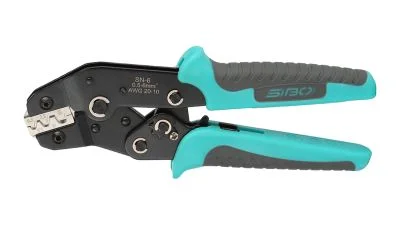
How to Use SN-6 Ratchet Crimper Pliers for Secure Non-Insulated Wire Connections
The SN-6 ratchet crimper pliers are designed for making secure connections with non-insulated terminals, bare wire connectors, and copper connectors. They support wire sizes from 0.5 to 6.0 mm², or 20–10 AWG, making them suitable for electrical repairs, control panels, automotive wiring, and general installation work. Before crimping, select a terminal that matches the wire size, then strip only the required length of insulation without cutting or nicking the conductors.
Place the terminal into the correct crimping cavity and insert the stripped wire until the conductors reach the terminal barrel. Squeeze the handles steadily until the ratchet completes its cycle and releases. This controlled action applies consistent pressure, helping prevent loose connections and uneven crimps. The precision jaws are produced with advanced metal injection molding technology, providing uniform alignment and tight tolerances for clean, accurate results.
After crimping, check that the terminal is firmly attached and that no strands are exposed beyond the connection area. A gentle pull test can help confirm mechanical stability, while the smooth, polished jaw surface reduces burrs and debris that could interfere with the crimp. For dependable performance, keep the tool clean, use the correct cavity for each wire size, and avoid forcing oversized terminals into an unsuitable position.
FAQS
: What is a China pin terminal crimper?
: It is a hand tool manufactured in China for attaching pin terminals to stripped wires. Its die compresses the terminal barrel around the conductor.
How does a pin terminal crimper work?
Matched dies reshape the metal barrel around the wire. This creates a cold mechanical and electrical connection without solder.
What makes a crimper suitable for production work?
Look for stable die alignment, clear wire-size markings, and repeatable handle pressure. A ratcheting handle helps prevent early release.
Should I choose interchangeable dies?
Interchangeable dies support different terminal sizes and profiles. A fixed die may work better for one repeated application.
How can I inspect a finished crimp?
Check for even compression, a visible conductor brush, and undamaged insulation. The terminal should not rotate easily.
Is visual inspection enough?
No. A shiny crimp can still have weak internal contact. Use crimp-height measurement and a gentle pull test.
What wire details must match the tool?
Match the wire gauge, terminal material, and barrel profile. A mismatch can damage strands or increase electrical resistance.
What problems can cheap crimpers develop?
The ratchet may drift after repeated use. Smooth handles can feel acceptable, but performance may still vary.
How do I compare several crimpers?
Prepare identical wires and terminals, then make several samples. Record crimp height, pull-test results, and visible defects.
What does a reliable connection look like?
The barrel grips the conductor firmly without cutting strands. The insulation support should hold the wire without crushing it. Small errors matter.
Conclusion
A Pin Terminal Crimper is a specialized hand tool designed to attach pin terminals securely to electrical wires by compressing the terminal around the conductor. This article explains how the crimping process creates a stable mechanical and electrical connection, and identifies the features that define a high-quality tool, including accurate die alignment, consistent pressure, durable construction, comfortable handles, and compatibility with different terminal sizes. It also outlines practical methods for comparing Chinese crimper manufacturers, such as evaluating material quality, production consistency, technical support, customization options, and quality-control procedures.
Choosing the right crimper requires matching the tool’s die range and crimping profile to the terminals and wire gauges being used. Proper preparation is equally important: strip the wire cleanly, insert it fully into the terminal, apply even pressure, and inspect the finished connection for secure contact and balanced compression. Regular cleaning, lubrication of moving parts, and careful storage can help maintain performance and extend the tool’s service life.