
Look, picking the right Construction Crimper in 2026 isn’t just about crunching pressure ratings and price tags anymore. Jobsite conditions have changed—you now need tools that are powerful, portable, traceable, and easy to keep up with. Hydraulic crimpers? Still a solid choice for heavy cable and big terminals. But battery-powered models? They’re a game changer when it comes to cutting down setup time. Honestly, manual crimpers? Still pretty useful for smaller installations and confined spaces. They just work, you know?
You know, after working on real job sites, you start to realize something pretty simple—the fanciest or most powerful tool isn’t always the one you want in your hand. Sure, a heavy-duty hydraulic unit can chew through thick cables like butter, but lugging that thing up a ladder? Yeah, that gets old fast, and it really slows you down when you’re working overhead. On the flip side, a cordless crimper gives you that freedom to move around, but then you’ve gotta think about things like whether the battery’s too cold, how long it takes to charge, and whether you can actually get it serviced when it acts up. And let’s not forget the old-school manual ones—they give you great control and basically ask for nothing in terms of upkeep, but if you’re doing the same crimp over and over all day, your arm’s gonna get tired, and that’s when mistakes start creeping in. So yeah, it’s all about trade-offs.
So, you’re thinking about crimpers for 2026? Yeah, there’s a lot to consider. This guide walks you through the main types that are going to matter on construction sites—hydraulic, battery-powered, manual, and the specialized ones. We’re looking at them through practical stuff: crimp range, die availability, cycle speed, ergonomics, inspection features, and how reliable they’ll be long-term. Now, the manufacturers like Greenlee, RIDGID, Klauke, and Milwaukee – they have specs and documentation that can give you a good starting point, but honestly? You’ve gotta verify them in the field. Don’t just trust the brochure. Look, a catalog can only show you so much—it won’t tell you about that cramped panel or those freezing mornings out in the field. And honestly, you should take any performance claim with a grain of salt. What really matters? Independent testing, people who actually know how to operate the gear, and keeping up with maintenance—those are what back up a decision. The right choice comes down to how you connect, where you work, and what it’ll cost you in the long run, not just the marketing fluff they throw at you.
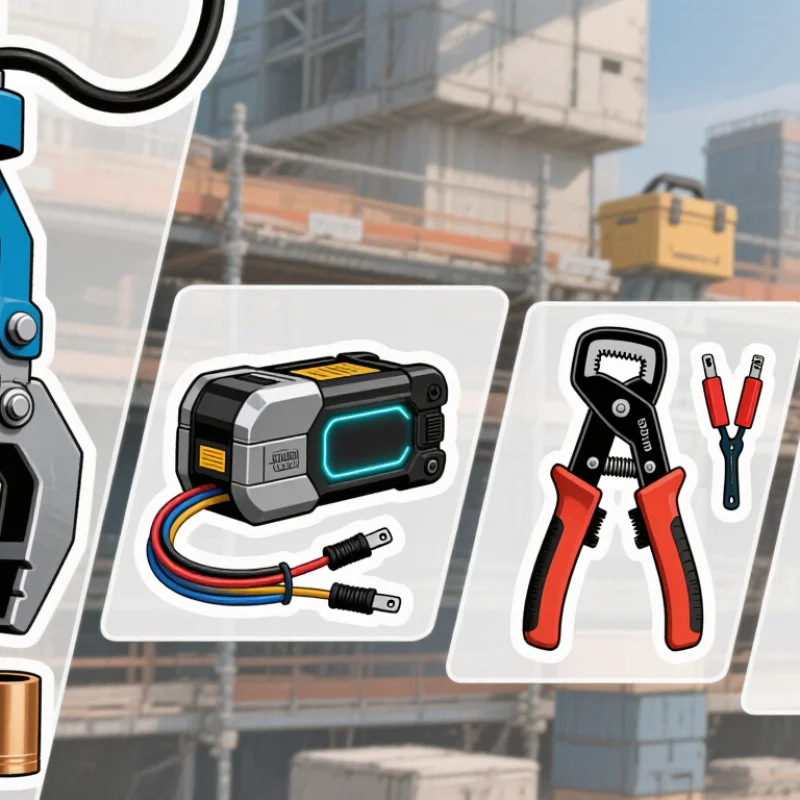
What Is a Construction Crimper and How Does It Work?
A construction crimper joins cables, terminals, sleeves, or reinforcement components through controlled compression. It does not melt metal. Instead, its die squeezes the connector around the material, creating a tight mechanical and electrical connection. Manual crimpers suit small conductors and occasional repairs. Ratcheting models improve pressure consistency. Hydraulic crimpers handle larger cable sizes with less hand effort. Battery-powered hydraulic crimpers add speed on repetitive sites. In 2026, the best type depends on material size, access, connection standard, and inspection requirements.
A correct crimp needs the correct die, connector, and compression sequence. An oversized die can leave hidden gaps. An excessive force can damage strands or deform the sleeve. A crimp may look perfect and still fail under heat or vibration. The U.S. Bureau of Labor Statistics recorded 1,075 fatal construction workplace injuries in 2023. That figure reinforces a practical point: tool selection and verification are safety controls, not minor preferences. OSHA guidance also stresses de-energizing and verifying electrical systems before work begins.
Tips: Check the manufacturer’s force range and die markings before every connection. Keep dies clean and inspect them for cracks. Use a calibrated gauge or pull test when the project specification requires it. Record tool inspections for critical installations. I would not trust appearance alone; measurable compression is more reliable. Industry standards, such as IEC 61238-1 for compression connectors, can guide acceptance decisions.
What Are the 2026 Top Construction Crimper Types?
A construction crimper compresses a terminal, sleeve, ferrule, or fitting around a cable, wire, pipe, or reinforcement component. The tool applies controlled force through a die to create a permanent mechanical connection.
| Category | Representative operating-force range (kN) |
|---|---|
| Manual Ratchet Crimper | 1 – 10 |
| Hand-Hydraulic Crimper | 40 – 100 |
| Battery-Hydraulic Crimper | 60 – 130 |
| Pneumatic Crimper | 30 – 100 |
How to read the chart: The bars show representative operating-force ranges commonly associated with major construction crimper types. Actual force depends on the tool design, die size, material, and connection standard. Manual models are suited to lighter connections, while hydraulic, battery-hydraulic, and pneumatic models support larger or higher-load applications.
Which Types of Construction Crimpers Are Available in 2026?
In 2026, constructioN Crimpers are available in several practical forms. Manual ratchet crimpers suit smaller copper terminals, control wiring, and occasional repairs. They provide direct feedback, but repeated squeezing can quickly tire the operator. Hydraulic hand crimpers deliver greater force for large cable lugs and sleeves. They work well where electricity or compressed air is unavailable.
Battery-powered electro-hydraulic crimpers are increasingly common on active construction sites. Their compact heads fit inside crowded panels and narrow service spaces. A charged battery can complete many connections without a pump hose. Pneumatic crimpers remain useful in workshops with stable air systems. They offer fast cycles, although their hoses reduce mobility. Bench-mounted mechanical crimpers support repetitive production and consistent positioning. They are less convenient for overhead installation.
When selecting an N Crimper, match its die profile, force range, and material compatibility to the connector. Copper and aluminum require different handling in many applications. Check whether the tool supports hexagonal, indent, or other approved crimp patterns. I have found that clear markings reduce mistakes when lighting is poor. Calibration also matters, especially for high-load connections. No single type is perfect. A hydraulic tool may feel powerful, yet its weight becomes noticeable after hours above shoulder height. Manual models can seem basic, but they often provide dependable control. Inspect the finished crimp for full compression, clean alignment, and no visible conductor damage. Manufacturer instructions and applicable electrical standards should guide every selection.
What Are the 2026 Top Construction Crimper Types? – Which Types of Construction Crimpers Are Available in 2026?
Construction crimpers are selected according to the connector, material, required force, production volume, and available power source. The following table summarizes the main crimper types used in construction, electrical installation, plumbing, mechanical assembly, and industrial field work in 2026.
| Crimper Type | Primary Application | Typical Materials or Connectors | Power Source | Typical Capacity | Main Advantages | Key Limitations |
|---|---|---|---|---|---|---|
| Manual Ratcheting Crimper | Electrical wiring, terminal installation, and light-duty construction work | Insulated and non-insulated terminals, wire ferrules, small copper or aluminum lugs | Hand-operated | Commonly suitable for small conductors up to approximately 6 AWG, depending on the die set | Portable, economical, easy to control, and suitable for occasional field work | Requires hand force; slower for large conductors and repetitive production work |
| Compound-Leverage Crimper | Heavy-duty electrical installation and larger terminal assemblies | Copper and aluminum cable lugs, splices, and mechanical terminals | Hand-operated with compound linkage | Often used for medium-size conductors up to approximately 2/0 AWG, depending on tooling | Produces greater crimping force than standard hand tools while remaining portable | Heavier and more expensive than basic manual crimpers; still requires operator effort |
| Manual Hydraulic Crimper | Utility, commercial, and construction cable termination | Large copper or aluminum lugs, splices, and compression connectors | Hand-pumped hydraulic system | Commonly covers approximately 4 AWG to 600 kcmil, depending on dies and tool design | High compression force, no battery required, and effective for large cable sizes | Slower than powered tools; requires pumping effort and regular hydraulic maintenance |
| Battery-Powered Hydraulic Crimper | Field installation, power distribution, renewable-energy systems, and commercial electrical work | Compression lugs, splices, grounding connectors, and large conductors | Rechargeable battery with hydraulic drive | Frequently available for conductor ranges from approximately 4 AWG to 750 kcmil or larger | Fast cycle times, consistent force, reduced operator fatigue, and good job-site mobility | Higher purchase cost; battery charging, storage, and hydraulic servicing are required |
| Pneumatic Crimper | High-volume assembly and repetitive terminal or hose-fitting work | Wire terminals, ferrules, small connectors, and selected hose fittings | Compressed air | Generally used for small to medium terminals; capacity depends strongly on the die and cylinder size | Rapid cycling, low manual effort, and consistent operation in fixed work areas | Needs a reliable air compressor and is less convenient for remote outdoor work |
| Electric Bench Crimper | Workshop and production-line assembly of repeatable electrical connections | Wire terminals, ferrules, stamped contacts, and standardized cable assemblies | Electric motor or servo drive | Usually designed for small to medium conductors and repeatable die-specific applications | High repeatability, fast throughput, controlled stroke, and reduced operator fatigue | Stationary equipment with higher setup cost; not ideal for irregular field connections |
| PEX and Multilayer Pipe Crimper | Residential and commercial plumbing installation | PEX or multilayer pipe with compatible copper or stainless-steel ring systems | Manual, ratcheting, or battery-powered | Common pipe sizes range from approximately 1/2 inch to 2 inches, depending on the system | Creates compact plumbing joints without soldering and supports efficient installation | Must match the specified pipe, ring, and fitting system; incorrect calibration can cause leaks |
| Hydraulic Hose Crimper | Construction equipment maintenance and hydraulic hose assembly | Hydraulic hoses, ferrules, sleeves, and compatible hose fittings | Manual, electric, or hydraulic power unit | Often handles hose sizes from approximately 1/4 inch to 2 inches, depending on the machine | Produces strong, uniform hose assemblies for mobile equipment and industrial systems | Requires exact hose-and-fitting specifications, correct die selection, and trained operation |
| Wire Rope Swaging Crimper | Rigging, lifting, guardrails, temporary structures, and safety cable installation | Wire rope sleeves, ferrules, and selected cable terminations | Manual lever, hydraulic, or powered system | Capacity varies by rope diameter; many construction tools cover small to medium wire rope sizes | Creates compact mechanical terminations without welding and supports field repairs | Requires approved sleeve-and-rope combinations and proper inspection after crimping |
| Coaxial and Data-Cable Compression Tool | Low-voltage, security, communications, and building-network installation | Coaxial connectors, data-cable plugs, and selected modular connectors | Hand-operated or ratcheting | Designed for connector-specific cable diameters rather than large power conductors | Quick installation, consistent connector compression, and easy transport between work areas | Limited to compatible connector profiles; incorrect cable preparation can reduce signal quality |
Capacity figures are typical industry ranges rather than universal limits. Always verify the tool rating, die profile, connector specification, cable size, and applicable installation standard before use.
How Do Hydraulic Construction Crimpers Differ from Manual Models?
In 2026, construction crimpers generally fall into hydraulic, manual, battery-assisted, and specialized formats. Hydraulic construction crimpers use controlled fluid pressure to compress fittings evenly. This reduces hand fatigue during repeated work. They are useful for thick hoses, large connectors, and demanding site conditions. The operator positions the fitting, checks the die, and activates the pump. The tool does the heavy work.
Manual construction crimpers depend on lever force and accurate hand alignment. They are lighter, easier to carry, and usually simpler to maintain. A technician can use one in a narrow service space without searching for power. They suit smaller fittings and occasional repairs. However, repeated squeezing can tire the wrist and produce inconsistent results. That risk is easy to underestimate. An F Crimper may be practical for compact applications, but its value depends on fitting size, material, and required compression.
Hydraulic models often provide faster production and more repeatable pressure, yet they need clean oil, inspected seals, and calibrated components. A leaking hose can stop work suddenly. Manual models rarely fail in such a dramatic way, but worn jaws may affect the finished connection. Field checks should include die condition, fitting alignment, and the manufacturer’s pressure specifications. I have found that choosing the strongest tool is not always the best decision. A heavy hydraulic crimper can become awkward on ladders or inside crowded equipment bays. Practical selection should match the connection, workspace, production rate, and operator strength.
What Are the Main Applications of Each Crimper Type?
In 2026, construction teams choose crimpers by connection size, material, and work location. Manual crimpers suit light-duty cable lugs, small terminals, and repair work. They provide direct control on ladders or narrow service spaces. The operator must apply steady pressure and inspect the finished indentation. A loose crimp can heat under load. Easy to miss.
Hydraulic crimpers handle larger copper or aluminum lugs, grounding conductors, and heavy electrical assemblies. They are useful in commercial buildings, substations, and equipment rooms. Their controlled force supports repeatable results across thick cable sizes. Battery-powered hydraulic models improve productivity on large sites because no pump hose limits movement. An Ev Crimper is especially useful for high-voltage vehicle cable terminals, battery connections, and charging-system repairs. Correct die selection remains essential.
Pneumatic crimpers work well in workshops with stable compressed air. They support repetitive hose fittings, cable terminals, and production-style assembly. Dedicated hose crimpers create secure connections between fittings and pressure lines. Technicians should verify hose size, fitting profile, and calibration before pressing. I have found that speed can hide poor preparation. Clean the conductor, align the terminal, and mark the insertion depth. Not every job needs the strongest tool. Sometimes, a careful manual crimp is more reliable than rushed hydraulic work.
How Should You Choose the Right Construction Crimper?
What Are the 2026 Top Construction Crimper Types?
Choosing a construction crimper starts with the joint, not the tool’s advertised force. Manual crimpers work well for small copper lugs and occasional repairs. Hydraulic models handle thick cable, structural sleeves, and repeated high-force connections. Battery-powered crimpers improve access on scaffolds and crowded service rooms. Pneumatic units suit controlled workshops with reliable compressed air.
Match the die profile to the connector specification. A wrong profile can leave hidden gaps, even when the joint looks tight. For telecom installation, a 5g Crimper should match the cable diameter, shield design, and approved connector system. Check calibration records before demanding production accuracy. The tool must fit the material, not merely the job title.
Operator fatigue also matters. The Associated General Contractors’ 2024 Workforce Survey reported that 94% of construction firms struggled to fill open positions. Fewer skilled hands increase the value of simple controls, clear inspection points, and manageable weight. Deloitte’s 2025 Engineering and Construction Industry Outlook also identifies labor availability and productivity as continuing industry pressures.
Do not automatically choose the largest hydraulic head. It may deliver power but restrict movement inside a crowded panel. A lighter battery model may improve speed, although charging routines can become a weak point. I would test the crimper with actual connectors, gloves, and working height before purchase. That practical test is often overlooked.
What Safety Features and Maintenance Practices Matter Most?
In 2026, construction crimpers generally fall into manual, hydraulic, battery-powered, and pneumatic types. Each type creates different safety demands. Manual crimpers suit smaller fittings and controlled field work. Hydraulic models deliver greater force but can hide dangerous pressure. Battery and pneumatic tools improve speed, yet operators must manage stored energy carefully.
A reliable crimper should include a pressure-release mechanism, secure die locking, and a guarded trigger. Non-slip handles matter when gloves become oily or wet. Battery tools should have trigger locks and clear charge indicators. Pneumatic units need sound hoses, tight couplings, and regulated air pressure. Never bypass a safety feature to finish one connection faster. That shortcut can damage fittings or injure hands.
Maintenance starts with a clean inspection area.
Wipe dies after each shift, then check for chips, cracks, and uneven wear. Replace damaged dies immediately. Hydraulic tools require leak checks around seals, hoses, and couplers. Follow the manufacturer’s specified lubricant and service intervals. Battery contacts should stay dry and free from metal debris. Pneumatic tools need filtered, regulated air. Keep inspection records.
I once saw a crimper pass a quick visual check but produce inconsistent connections. The die had worn gradually, so the problem was easy to miss. That experience changed my routine. I now test sample crimps, compare measurements, and stop work when results drift. Calibration matters more than confidence. Even experienced crews can overlook small changes during a busy installation.
FAQS
What is a construction crimper?
It joins cables, terminals, sleeves, or reinforcement parts through controlled compression. It does not melt metal. Its die squeezes the connector around the material, creating a tight connection.
How does a construction crimper create a secure connection?
The operator places the material inside a matching die. Pressure then deforms the connector around the conductor or fitting. The result should resist movement, heat, and vibration. Appearance alone is not enough.
When should I choose a manual crimper?
Manual crimpers suit small conductors, light terminals, and occasional repairs. They are light and useful in narrow spaces or on ladders. However, repeated squeezing can tire the wrist. Pressure may become inconsistent.
What are hydraulic crimpers best used for?
Hydraulic crimpers handle large cables, heavy lugs, grounding conductors, and thick fittings. They reduce hand effort during repeated work. They also provide more consistent compression. They need clean oil, sound seals, and proper inspection.
Are battery-powered hydraulic crimpers useful on large sites?
Yes, they improve movement and speed during repetitive work. No pump hose limits the operator’s position. They suit large cable assemblies and high-voltage vehicle connections. The battery still needs charging and checking.
How do I select the correct die?
Match the die with the connector, conductor size, and required compression profile. Check the markings before every connection. An oversized die can leave hidden gaps. A wrong die can ruin an otherwise careful job.
What safety checks should happen before crimping?
De-energize electrical systems before work begins. Verify isolation with suitable testing equipment. Inspect the tool, dies, handles, hoses, and seals. Wear appropriate protective equipment. Never trust memory alone.
How can I verify a finished crimp?
Check insertion depth, alignment, compression marks, and visible damage. Use a calibrated gauge or pull test when project requirements demand it. Inspect critical connections again after installation. I would not accept a perfect-looking crimp without measurable evidence.
How should construction crimpers be maintained?
Keep dies clean and check them for cracks or wear. Inspect hydraulic hoses, oil, seals, and battery condition. Store tools away from dirt and moisture. Record inspections for important installations. Small defects become expensive failures.
Conclusion
A Construction Crimper is a tool used to compress, join, or shape metal components and reinforced materials in building, infrastructure, electrical, plumbing, and equipment installation work. In 2026, common types include manual crimpers, hydraulic crimpers, battery-powered models, and specialized crimpers designed for cables, pipes, fittings, and structural connections. Manual tools are compact, affordable, and suitable for light-duty tasks, while hydraulic and powered models deliver greater force, consistency, and efficiency for larger or repetitive projects.
Choosing the right crimper depends on material type, connection size, required pressure, work frequency, portability, and available power sources. Manual crimpers can be practical for maintenance and occasional jobs, whereas hydraulic models are better suited to demanding construction environments. Important safety features include pressure control, secure handles, protective guards, and reliable locking mechanisms. Regular inspection, cleaning, lubrication, correct die selection, and timely replacement of worn parts help maintain performance and reduce operating risks.