
Picking Terminal Crimpers for your business isn’t just about comparing price tags. You’ve got to think about your wire range, the terminal design, how much you’re producing, and what quality level you actually need. A small hand crimper might be perfect for repair jobs, while a pneumatic or automated model could make more sense on a busy assembly line. Pick the wrong one, and you might end up with loose strands, uneven compression, or damaged insulation. And those little defects? They can turn into pretty expensive failures.
David Morrow, a veteran application engineer in the connector industry, once put it this way: ‘A reliable crimp begins with the right terminal, the right wire, and the right tooling.’ That still holds true. So buyers should look at things like crimp height control, die interchangeability, operator comfort, maintenance access, and verification features. Sure, suppliers such as TE Connectivity, Molex, and Schleuniger publish helpful technical guidance—but their recommendations still need careful comparison. Marketing talk isn’t proof.
A realistic evaluation should include some sample production. Crimp a few terminals using your actual wire sizes, then check pull strength, conductor compression, bell mouth formation, and insulation support. Ask if replacement dies are available, and whether operators can pick up the process quickly. A cheaper tool can look tempting, but downtime might cost more than the purchase price ever saved. No selection is perfect. Your first assumptions may be wrong. Test them before you commit. This guide, How to Choose Terminal Crimpers for Your Business?, explains how to balance reliability, productivity, operator experience, and long-term value—without overlooking the details that quietly determine crimp quality.
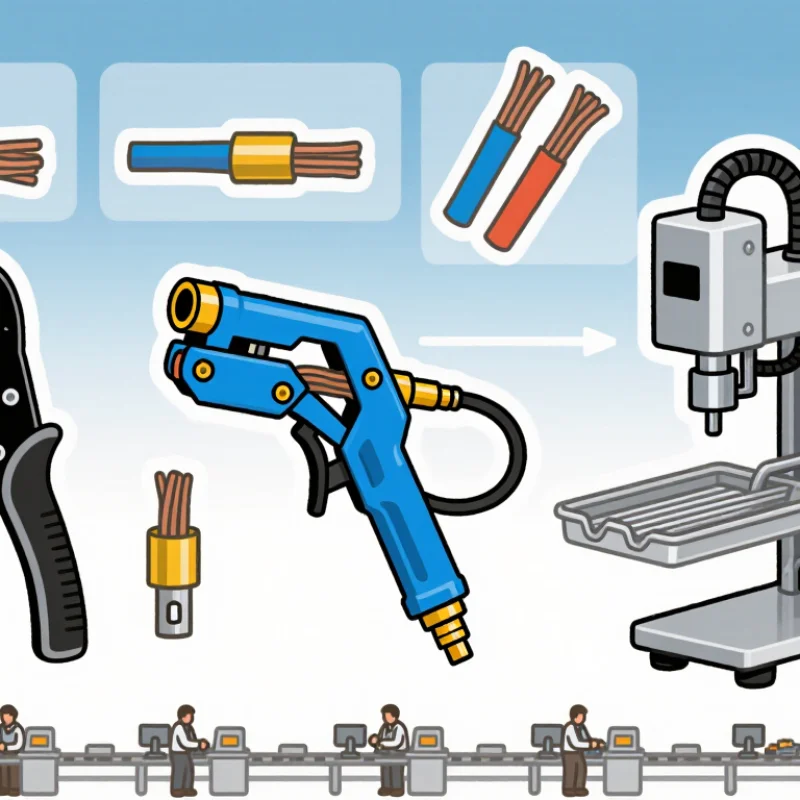
Understanding Terminal Crimpers and Their Business Applications
How to Choose Terminal Crimpers for Your Business?
Understanding Terminal Crimpers and Their Business Applications
A terminal crimper is more than a hand tool. It joins a wire and terminal through controlled mechanical pressure. The right
Crimpers Tool
creates a firm connection without cutting wire strands or damaging insulation. In business settings, this consistency protects product quality and reduces rework. Technicians may use crimpers in control panels, appliances, vehicles, and equipment assemblies. Each application demands a different tool design. A light-duty hand crimper may suit occasional repairs. High-volume production usually requires a ratcheting model or powered equipment. The choice depends on wire size, terminal material, daily output, and operator skill.
Before purchasing, match the die profile with the terminals you actually use. A hex crimp may not suit an open-barrel terminal. Check the tool’s stated wire range carefully. Then test several sample connections. A proper crimp should hold during a controlled pull test and show even compression. Appearance can mislead. A shiny indentation is not proof of strength. Examine the conductor entry, insulation support, and terminal alignment. Replaceable dies can reduce long-term costs, but only if they remain accurate. Keep simple inspection records.
In workshop trials, operators often favor lighter tools after several hours. That preference matters. Hand fatigue can cause uneven pressure and skipped checks. I would also allow time for training, because even good tools can be used poorly. One limitation remains: no crimper compensates for unsuitable terminals or damaged wire. A practical trial with real materials may reveal problems that a catalog never shows.
Identifying Your Required Terminal Types and Crimping Capacity
Choosing a terminal crimper starts with identifying the terminals your business actually installs. Do not choose by tool appearance alone.
Check whether your work involves insulated terminals, non-insulated lugs, open-barrel contacts, or wire ferrules. Each type requires a different crimp profile and forming action. A ferrule crimper cannot reliably replace a tool designed for open-barrel terminals. Terminal material matters too. Copper, tinned copper, and aluminum may respond differently under pressure.
Record the wire sizes used in daily production. A small panel shop may handle 0.5 to 2.5 mm² conductors, while battery assemblies can require much larger lugs. Select a crimper whose capacity covers your normal range, not only its maximum rating. Oversized tools can damage small terminals. Undersized tools may create loose connections. That is dangerous.
Look for adjustable dies, a controlled ratchet, and clear size markings. A full-cycle ratchet can reduce incomplete crimps, especially during repetitive work. However, mechanisms wear, and markings are not proof of accuracy. Inspect the crimp height, conductor brush, insulation support, and terminal wings. A simple pull test can reveal weak compression. Visual checks alone can miss internal defects.
A useful workshop lesson is to test samples before purchasing multiple tools. Use your actual terminals and cables. Record the results. The first choice may still need revision. Temperature, operator strength, and production volume can change the required crimping capacity. Reliable selection comes from matching the terminal type, conductor range, and inspection method together.
Comparing Manual, Ratchet, Hydraulic, and Automatic Crimpers
How to Choose Terminal Crimpers for Your Business?
Comparing Manual, Ratchet, Hydraulic, and Automatic Crimpers
Terminal crimpers affect connection quality, production speed, and operator fatigue. Choose according to wire size, daily volume, and required consistency.
Manual crimpers suit small batches, repairs, and field work. They cost less and need little maintenance. However, results depend heavily on hand pressure and technique. A loose terminal may look acceptable but fail during vibration testing. I have seen this happen.
Ratchet crimpers provide better control because the jaws complete their cycle before releasing. They improve repeatability without requiring electricity or compressed air. They also work well for medium-volume assembly. Still, operators must use the correct die and terminal combination. More force does not fix poor alignment.
Hydraulic crimpers handle larger terminals and thicker cables with less physical effort. They create strong, even compression, but their size and maintenance needs can limit mobile use. Automatic crimpers deliver the highest output for stable, repetitive production. They reduce operator variation and support process monitoring. Yet setup takes time, and changing terminal sizes can interrupt production.
Tube Crimpers
can help with tubular terminals and specific cable assemblies. Check whether the tool supports your conductor material and terminal dimensions. In a busy workshop, track rejected crimps, tool downtime, and operator feedback. These details often reveal more than the purchase price. Do not overlook training. Even advanced equipment produces unreliable connections when setup instructions are unclear.
Evaluating Tool Quality, Precision, Safety, and Operator Comfort
Choosing Terminal Crimpers for Your Business
Tool quality begins with the frame, jaws, ratchet, and return spring. In daily production, loose handles and uneven jaw surfaces create inconsistent crimps. Ask for material details, cycle testing, and inspection records. Do not judge tools by attractive packaging. A crimper should close smoothly and release only after the terminal is fully compressed. That safeguard reduces partially formed connections.
Precision deserves direct testing. Use approved wire sizes and terminals, then inspect cross-sections when possible. Measure crimp height with a suitable gauge, and check pull strength against internal specifications. A bright terminal can still hide a weak connection. I once trusted visual checks too much. That assumption failed during vibration testing. Build a sample log with the operator, wire size, setting, and result. This record creates traceability and exposes repeated errors.
Safety includes grip design, guarded moving points, and controlled hand force. Operators should not twist their wrists or squeeze until their knuckles whiten. A balanced handle helps during long shifts, while Mini Crimpers may suit confined panels and light-duty tasks. They are not automatically better. Test reach, visibility, and fatigue with real users. Let operators work for thirty minutes, then ask where pressure builds. The answer may challenge your purchasing plan. Provide training, scheduled cleaning, and periodic calibration. Replace tools when jaw wear changes the crimp, even if the handle still looks usable.
How to Choose Terminal Crimpers for Your Business? – Evaluating Tool Quality, Precision, Safety, and Operator Comfort
| Evaluation Dimension | What to Check | Practical Benchmark | Why It Matters in Business Use | Suggested Evaluation Method | Priority |
|---|---|---|---|---|---|
| Tool Quality | Frame construction and material | Hardened steel or forged alloy-steel frame with a corrosion-resistant surface treatment | A rigid frame reduces deflection and supports consistent crimp geometry during repeated production cycles. | Inspect the frame for visible flex, uneven joints, sharp edges, surface damage, and loose fasteners. | High |
| Tool Quality | Die and jaw durability | Precisely machined jaws with clearly marked terminal and wire-size ranges | Accurate jaw profiles help prevent terminal deformation, conductor damage, and premature tool wear. | Check jaw alignment, markings, surface finish, and whether the jaws close evenly across their full width. | High |
| Tool Quality | Serviceability | Replaceable dies or documented adjustment and maintenance procedures | Serviceable tools can reduce downtime and total ownership cost when used in high-volume operations. | Review the availability of replacement parts, adjustment instructions, cleaning requirements, and inspection intervals. | Medium–High |
| Precision | Terminal and wire compatibility | The tool must match the specified terminal type, conductor material, insulation profile, and wire cross-section | A crimper designed for the wrong terminal family may produce a joint that looks acceptable but fails electrical or mechanical requirements. | Compare the tool specification with the terminal manufacturer’s application data and the applicable wiring standard. | Critical |
| Precision | Crimp profile consistency | Uniform, centered crimps without cracks, excessive flash, loose strands, or insulation caught in the conductor crimp | Consistent profiles improve pull-out strength, electrical continuity, and process repeatability. | Perform visual inspections and periodic cross-section or pull-force tests using a defined quality-control procedure. | Critical |
| Precision | Calibration and verification | Documented inspection records and a repeatable verification method appropriate to the terminal system | Verification helps detect jaw wear, incorrect adjustment, and process drift before defective assemblies reach customers. | Establish incoming inspection, scheduled checks, and acceptance limits based on engineering requirements. | High |
| Safety | Full-cycle mechanism | A controlled ratchet that prevents the handles from opening before the crimp cycle is completed | Full-cycle mechanisms reduce the risk of partially formed crimps and make operator technique more consistent. | Test the release behavior with an unloaded tool and during representative crimping operations. | High |
| Safety | Pinch-point protection | Handle geometry and guards that minimize exposure to moving jaw and linkage areas | Reducing pinch points lowers the likelihood of hand and finger injuries during repetitive work. | Operate the tool slowly and identify accessible moving areas throughout the complete handle stroke. | High |
| Safety | Workplace compliance | Use procedures aligned with applicable occupational-safety rules and the tool’s operating instructions | Safe operation depends on both tool design and correct training, inspection, and personal protective practices. | Document training, pre-use checks, maintenance, storage, and the safe handling of wire and terminals. | Critical |
| Operator Comfort | Handle ergonomics | Contoured, non-slip handles with no sharp edges and a grip size suitable for the operator | Better ergonomics can reduce hand fatigue and improve control during repetitive crimping tasks. | Have representative operators test the tool with normal gloves and record discomfort, slipping, and reach issues. | High |
| Operator Comfort | Required hand force | The tool should complete the specified crimp without excessive force or repeated wrist compensation | High operating force can increase fatigue, reduce throughput, and encourage incomplete or inconsistent crimps. | Run a practical trial over a representative batch and collect operator feedback alongside quality results. | High |
| Operator Comfort | Tool weight and balance | A balanced design appropriate for the wire range and the expected duration of use | Good balance reduces wrist loading, especially when operators work at awkward angles or above bench height. | Compare hand fatigue and positioning control during a timed trial rather than judging weight alone. | Medium–High |
| Productivity | Cycle efficiency | Easy terminal positioning, smooth ratchet action, and rapid return to the open position | Efficient handling can improve output without sacrificing inspection or crimp quality. | Measure completed acceptable crimps per hour during a realistic production simulation. | Medium–High |
| Business Value | Total cost of ownership | Purchase price evaluated together with service life, replacement parts, calibration, downtime, and training | The least expensive tool initially may cost more if it produces rework, wears quickly, or lacks support. | Compare projected cost per acceptable crimp over the expected service period. | High |
| Business Value | Trial and acceptance criteria | Written requirements covering fit, crimp appearance, mechanical performance, operator usability, and safety | A structured trial prevents purchasing decisions based only on price or short demonstrations. | Use production samples, trained operators, inspection records, and documented approval limits before adoption. | Recommended |
Matching Crimper Features to Your Production Volume and Budget
Choosing terminal crimpers should begin with production volume, not catalog features.
A repair bench handling 50 terminals daily needs a different tool from a line producing 10,000 assemblies. Deloitte’s 2024 Smart Manufacturing and Operations Survey found that 86% of manufacturing leaders view smart operations as important for competitiveness. That does not mean every business needs automated crimping. It means capacity decisions should follow measured demand.
For low-volume work, a calibrated hand crimper may offer the best budget control. Look for adjustable dies, ergonomic handles, and clear wire-range markings. At medium volume, pneumatic assistance can reduce operator fatigue and improve cycle consistency. High-volume lines usually justify electric or pneumatic systems with force monitoring, applicator compatibility, and production counters. Track actual cycles per hour for one week. Estimates often look optimistic.
Quality matters more than speed alone.
IPC/WHMA-A-620 emphasizes measurable crimp requirements, including conductor brush, insulation support, and tensile performance. A tool that saves seconds but creates frequent rejects is expensive in disguise. Keep records of pull-test results and calibration dates. Small details matter.
A useful budget formula includes tooling, maintenance, training, scrap, and downtime.
I would not choose the cheapest crimper after comparing only purchase prices. That approach is tempting, but incomplete. Recheck the decision after three months. Production changes, and the “right” tool can become wrong surprisingly fast.
Checking Compatibility, Maintenance Needs, and Supplier Support
Choosing terminal crimpers for your business requires more than comparing pressure ratings. Start with compatibility. Check the terminal material, wire range, insulation type, and required crimp profile. Copper Crimpers may suit copper terminals, but they are not automatically suitable for every connector. A poor match can leave loose strands, damaged insulation, or an uneven compression mark.
Test representative samples before placing a large order. Use the wire sizes your technicians handle daily, including smaller conductors that are easy to overlook. Inspect the crimp height and pull strength. A hand tool may feel comfortable during a short trial, yet become tiring after several hundred operations. My own early mistake was judging comfort before checking the full terminal range. That choice created unnecessary rework.
Maintenance needs should also influence the purchase. Look for replaceable jaws, clear adjustment points, corrosion-resistant surfaces, and accessible cleaning instructions. Dust and metal particles can collect around the die area. A quick inspection at the end of each shift helps prevent inconsistent crimps. Keep a simple service log. It may reveal wear before failures become expensive.
Supplier support is part of the tool’s value. Ask whether technical staff can explain die selection, calibration checks, and safe operation. Confirm spare-part availability, response times, and training materials. Good suppliers provide practical answers, not vague promises. Still, support quality can change over time, so record important guidance and review performance after installation. A reliable tool deserves reliable follow-up.
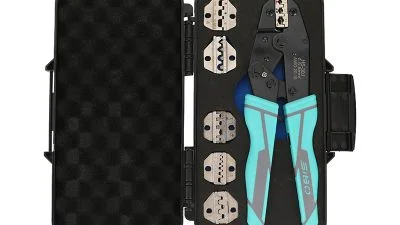
HS-30J Crimping Pliers: A Complete Guide to Efficient Terminal Crimping with 5 Interchangeable Jaws
The HS-30J crimping pliers are designed for efficient and precise terminal crimping in professional work environments. This combination tool includes five sets of interchangeable jaws, allowing operators to select the appropriate profile for different terminal sizes and connection requirements. The replaceable-jaw design improves flexibility while reducing the need to carry multiple dedicated crimping tools.
Built with durable materials and an ergonomic structure, the HS-30J supports stable handling during repeated operations. Its controlled crimping action helps create secure, consistent connections while reducing hand fatigue and improving work efficiency. The jaws can be changed according to the task, making the tool suitable for various terminal crimping applications without complicated adjustments.
Manufactured in China and supplied through professional factories and distributors, this tool is suitable for electronics assembly, electrical engineering, communication equipment, and general wiring work. Whether used for maintenance, installation, or production tasks, the HS-30J offers convenient operation, dependable performance, and adaptable crimping capability for technicians who require reliable results across different projects.
FAQS
What does a terminal crimper do?
It joins a wire and terminal through controlled mechanical pressure. A proper crimp holds firmly without cutting wire strands. It also protects the insulation from damage.
Which terminal types require different crimpers?
Insulated terminals, non-insulated lugs, open-barrel contacts, and ferrules need different forming profiles. A ferrule crimper cannot reliably replace an open-barrel tool. Match the die to the terminal.
How should I choose the correct wire range?
Record the wire sizes used in daily production. Select a tool covering your normal range, not only its maximum rating. An oversized crimper can damage small terminals.
Why should businesses test samples before buying?
Catalog information cannot show every real workshop problem. Test your actual wires and terminals. Record crimp height, alignment, and pull-test results.
What proves that a crimp is strong?
Appearance alone is unreliable. Check conductor entry, insulation support, terminal wings, and even compression. A controlled pull test can reveal weak connections.
Are ratcheting crimpers useful for repetitive work?
A full-cycle ratchet can reduce incomplete crimps during repetitive production. It should release only after full compression. However, ratchet mechanisms can wear over time.
How does operator comfort affect crimping quality?
Hand fatigue may cause uneven pressure and skipped inspections. Test the tool for thirty minutes with real operators. Lighter handles may help, but comfort is not automatic.
What safety and maintenance practices matter?
Use guarded moving points, balanced handles, and suitable hand force. Clean tools regularly and schedule calibration checks. Replace them when jaw wear changes the crimp.
Can a high-quality crimper fix unsuitable materials?
No. A good tool cannot correct damaged wire or unsuitable terminals. I once trusted visual checks too much. Vibration testing exposed the mistake.
Conclusion
Choosing the right Terminal Crimpers is essential for achieving reliable electrical connections, efficient production, and consistent product quality. Start by identifying the terminal types, wire sizes, and crimping capacity your business requires. Then compare manual, ratchet, hydraulic, and automatic models according to your application. Manual tools may suit occasional work, while ratchet and hydraulic crimpers can provide greater control and force for regular or heavier-duty tasks. Automatic equipment is often more suitable for high-volume production where speed and repeatability are priorities.
Beyond crimping power, evaluate tool quality, precision, safety features, and operator comfort. An ergonomic design can reduce fatigue, while accurate crimp control helps minimize defects. Your final choice should match production volume, available budget, maintenance resources, and compatibility with existing terminals and wiring systems. Also consider replacement parts, technical guidance, inspection requirements, and supplier support. By reviewing these factors together, you can select a dependable crimping solution that improves workflow, supports long-term performance, and delivers consistent results.