
Global buyers are stepping into a wire-processing market that’s getting tougher by the day. Grand View Research put the global wire and cable market at around USD 216.6 billion in 2023, and its report sees growth continuing through 2030—driven by EVs, renewable power, industrial automation, and data infrastructure.
Naturally, that means dependable Wire Crimper tools matter even more. Research and Markets also points to rising demand for professional hand tools in automotive, construction, and electrical maintenance work. That said, market databases don’t completely agree on how big the crimping-tool segment really is. And a ranking can still miss key regional differences. German buyers, for example, may care most about certification and repeatability. In Southeast Asia, durability, service access, and total cost might carry more weight.
Small mistakes add up. A loose terminal can cause heat, vibration damage, or intermittent signal loss. Chris Bayliss, a wire-processing trainer, puts the basic idea well: “A crimp is a system, not a single tool.” The terminal, conductor size, die profile, stripping length, and operator technique all need to work together. IPC/WHMA-A-620 is still a widely recognized reference for cable and wire harness workmanship.
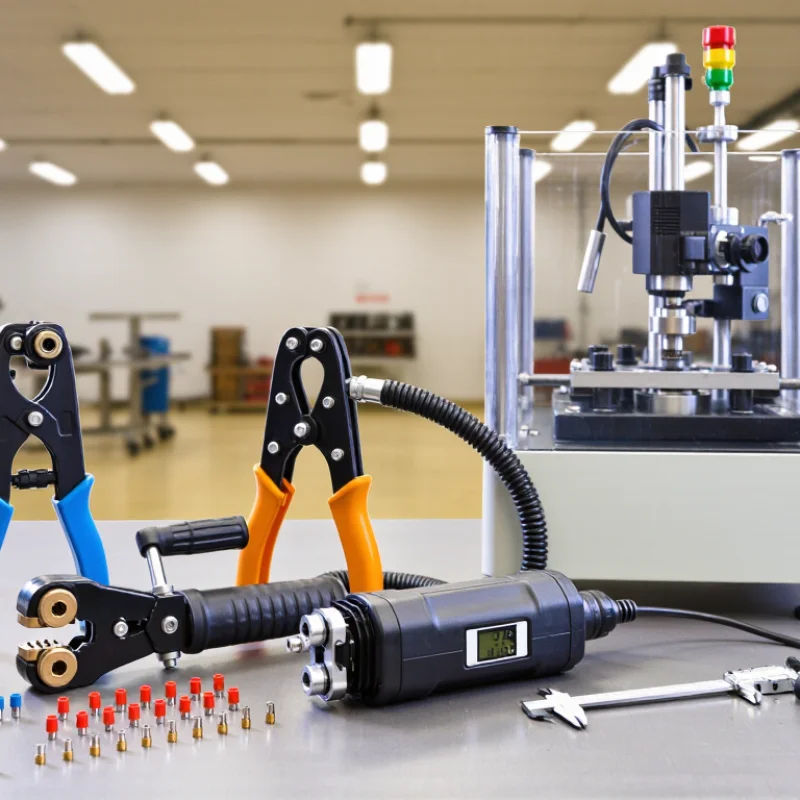
So this guide looks at the 2026 Wire Crimper types global buyers are using. We’ll cover ratchet, hydraulic, pneumatic, battery-powered, and automatic models, along with application limits, ergonomics, maintenance needs, and verification methods. No tool is perfect—even a pricey crimper can fail if the terminal or die doesn’t match. Often, the best choice is simply the one that fits your actual wire range, production volume, and inspection process.
What Is a Wire Crimper and Why Does It Matter in 2026?
A wire crimper compresses a terminal around a stripped conductor, creating a stable electrical and mechanical connection. A Wire End Crimper is designed for this final connection, often used on ferrules and small cable ends. It matters because loose crimps can cause heat, voltage loss, vibration damage, and unexpected equipment failure.
The 2024 MarketsandMarkets Wire and Cable Market report estimates growth from about USD 202 billion in 2024 to nearly USD 295 billion by 2029. More wiring means more terminations, but volume does not guarantee quality.
In a workshop, the right crimper should match terminal size, conductor material, and required profile. Manual ratcheting tools suit routine maintenance. Hydraulic models handle larger cables. Pneumatic tools support repeated production work, though they need clean air and regular inspection.
IPC/WHMA-A-620 remains a major workmanship reference for cable and harness assemblies. It emphasizes correct strip length, conductor placement, crimp height, and pull-test performance. These details are easy to overlook. I have seen a visually neat crimp fail because one strand sat outside the terminal barrel. That mistake is small, but its consequences are not. Buyers should request calibration records, sample crimps, and measurable pull-test results. A cheaper tool may still be suitable, but assuming so without testing is poor engineering.
How Wire Crimpers Work: Core Designs and Operating Principles
Wire crimpers join conductors to terminals through controlled deformation, not soldering. The tool compresses a terminal barrel around stripped wire strands. Matching dies create pressure from several directions. This forms a gas-tight electrical and mechanical connection when dimensions are correct.
Hand ratchet crimpers suit light wiring and maintenance work. Their ratchet prevents premature release, while interchangeable dies support different terminal sizes. Hydraulic and pneumatic crimpers deliver higher force for larger cables. Automated applicators repeat the stroke quickly in production lines.
The operator places the terminal in the die, inserts the conductor, and closes the handles until the mechanism releases. Small details matter. Strip length, conductor position, and die alignment affect the result.
Allied Market Research reported that the global wire and cable market reached about $201.7 billion in 2021, with projections to $295.8 billion by 2031. This expanding installation base increases demand for repeatable termination methods. IEC 60352-2 emphasizes suitable crimp geometry, conductor insertion, and mechanical verification.
In practice, a visually neat crimp can still fail a pull test. Theory is tidy; workshops are not. Copper hardness, insulation thickness, and tool wear can change compression results. Experienced technicians inspect the rear bellmouth, confirm full conductor capture, and test sample pulls.
Some operators rely too heavily on feel. That assumption deserves reconsideration.
Main Wire Crimper Types for Different Terminals and Cables
Choosing a wire crimper depends on the terminal shape, conductor size, and required connection strength. A 2024 MarketsandMarkets report valued the global wire and cable market at over USD 200 billion, increasing demand for repeatable termination work. That growth makes tool selection less forgiving.
For insulated ring, fork, and butt terminals, use a ratcheting insulated-terminal crimper. Its color-coded cavities suit common cable ranges and help prevent uneven compression. Non-insulated terminals need a tighter profile, often formed around the conductor barrel. Open-barrel crimpers fit automotive and signal terminals, where wings must fold precisely around strands and insulation. They are easy to misuse.
Ferrule crimpers compress stranded wires before insertion into screw or spring terminals. A square or hexagonal profile usually supports secure contact. A Solid Wire Crimper suits solid conductors and selected pin terminals, but it should not replace a stranded-wire tool. Coaxial crimpers require matched dies for shield and connector dimensions. For large battery or power cables, hydraulic crimpers deliver greater force and consistent hexagonal compression.
IEC 60352-2 and IPC/WHMA-A-620 emphasize controlled crimp geometry, conductor insertion, and pull-force verification. Field technicians often inspect insulation support under bright light, then perform a gentle pull test. I still see tools chosen by color alone. That shortcut fails when insulation thickness changes. Reports provide market direction, not a substitute for terminal-die compatibility or actual sample testing.
Comparing Manual, Ratcheting, Hydraulic, and Powered Crimpers
Manual, ratcheting, hydraulic, and powered crimpers serve different production realities.
Manual tools suit occasional repairs, small wire sizes, and low investment. Their feedback is direct, but hand pressure varies between operators. A ratcheting crimper improves repeatability because the jaws cannot release early. It is practical for control panels and field assembly. A
Wire Ferrule Crimper
should match the ferrule profile, conductor size, and insulation clearance.
Hydraulic crimpers handle thick conductors with less physical strain.
Their force is valuable for battery cables, distribution equipment, and demanding maintenance work. However, they are heavier and slower to reposition. Powered crimpers support higher output and consistent cycle times. The International Federation of Robotics reported 541,302 industrial robot installations worldwide in 2023. That figure signals continued automation growth, where controlled crimping can reduce repetitive manual work. It does not make every powered tool economical.
Tool selection should follow measured pull-test results, not catalog claims.
IPC/WHMA-A-620 provides widely used acceptance guidance for cable and wire harness workmanship. Check crimp height with a micrometer, inspect bellmouth formation, and record conductor brush length. A loose terminal may look acceptable under bright factory lighting. It can still heat during service. I still distrust a perfect-looking joint. Manual tools remain sensible for low volume, while ratcheting designs often offer the best balance. Hydraulic and powered models deserve investment when cable size, cycle count, or operator fatigue justifies the cost.
How to Choose a Wire Crimper for Global Industrial Applications
For global industrial work, choose a wire crimper by terminal design, conductor range, and repeatability—not appearance.
Mismatched dies can create hidden resistance, heat, and costly rework. A suitable tool should form the specified crimp profile without cutting strands. IEC 60352-2 offers useful requirements for solderless crimped connections.
Read the terminal manufacturer’s application data carefully. Small detail, large consequence.
The International Energy Agency’s Renewables 2024 report recorded 510 GW of new renewable capacity in 2023. This growth increases demand for reliable cable preparation in cabinets, inverters, and battery systems. Grand View Research reported that the global electrical connectors market reached approximately USD 84.8 billion in 2023. It also forecasts continued growth through 2030. These figures do not mean every application needs a hydraulic crimper. That assumption deserves review.
For smaller copper terminals, a calibrated ratcheting crimper usually provides practical control and portability. For larger conductors, hydraulic or pneumatic models can reduce operator fatigue and improve compression consistency. Check crimp-force data, gauge compatibility, die availability, and calibration records.
Test sample assemblies with pull-force and visual inspections before full production. Experienced technicians also examine conductor position, insulation clearance, and terminal deformation. Maximum capacity can mislead. A tool rated for 120 mm² may perform poorly on smaller terminals. Ergonomics matter during eight-hour shifts, especially when access is restricted. Reliability comes from verified results, not impressive specifications.
Key Standards, Materials, and Quality Factors for Buyers
2026 Top Wire Crimper Types for Global Buyers
A reliable wire crimper begins with the correct standard, not a shiny surface. For crimped connections, buyers should check IEC 60352-2 or relevant regional requirements. Some applications may also require product-specific electrical safety standards. Ask for current test reports, material declarations, and traceable inspection records. Do not rely on a certificate image alone.
Material choice affects service life. Hardened carbon steel offers strong jaw resistance, while corrosion-resistant finishes help in humid warehouses. The die should retain sharp, even edges after repeated cycles. Handles need firm insulation and a non-slip grip, especially when technicians work with gloves. A Wire Stripper Crimper should match the terminal type and wire range clearly. Vague markings create expensive mistakes.
I inspect sample tools by closing the jaws slowly. The dies should meet evenly, without visible gaps or sideways movement. Test several terminals, then measure pull-out force with suitable equipment. A smooth ratchet is useful, but excessive stiffness can tire operators. I have seen polished tools hide poor alignment. That detail is easy to miss. Buyers should also check burrs, spring fatigue, calibration intervals, and packaging damage. A small batch trial is wiser than trusting catalogue photographs, although even trial testing can miss long-term wear.
| Category | Minimum conductor area (mm²) | Maximum conductor area (mm²) |
|---|---|---|
| Open-Barrel Terminal | 0.08 | 2.5 |
| Ferrule Crimper | 0.25 | 6 |
| Insulated Terminal | 0.5 | 6 |
| Non-Insulated Terminal | 0.5 | 6 |
| Hydraulic Heavy-Duty | 6 | 300 |
2026 Top Wire Crimper Types for Global Buyers
The chart compares representative conductor cross-section ranges commonly associated with major wire-crimper categories. Actual capacity depends on the die profile, terminal design, conductor class, and tool specification.
Buyers should verify compliance with applicable requirements such as IEC 60352-2 for solderless connections, UL 486A-486B for wire connectors, and DIN 46228 for wire-end ferrules. Material selection, accurate die geometry, stable crimp force, corrosion resistance, and repeatable pull-out performance are key quality factors.
Buying and Maintaining Wire Crimpers Across International Markets
2026 Top Wire Crimper Types for Global Buyers
Buying and Maintaining Wire Crimpers Across International Markets
Global buyers should match the crimper to conductor size, terminal design, and daily workload. Ratcheting hand crimpers suit light assembly and field repairs. Hydraulic models deliver greater force for larger cables. Pneumatic crimpers help factories maintain steady output. Plier-style tools remain affordable, but results depend heavily on operator pressure.
That weakness matters.
Before ordering, request jaw profiles, compatible terminal ranges, material details, and test records. Check whether measurements use metric or imperial units. Confirm spare-jaw availability and packaging strength for long-distance shipping. A tool may look universal, yet small profile differences can create loose or damaged crimps. Ask for sample crimps and inspect the barrel for even compression, clean edges, and no cracked insulation. Photos help, but physical samples are more reliable.
Maintenance should begin with a clean bench and a simple inspection routine. Wipe metal surfaces after dusty work, then apply light lubricant where permitted. Keep jaws free from copper fragments and hardened residue. Store the tool dry, with handles closed but not forced. Recheck crimp height regularly using a gauge or approved pull-test method. Calibration intervals may vary by workload and local quality procedures. Do not ignore uncomfortable handles or uneven ratchet movement. They often signal wear before failure. My buying judgment becomes less confident when a supplier cannot explain testing, replacement parts, or service support. Cheap tools can become expensive through rejected assemblies and lost production time.
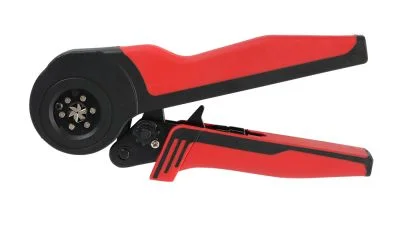
How to Choose a Self-Adjustable Crimping Tool for 16–6 AWG Wire Ferrules from China Suppliers
Choosing a self-adjustable crimping tool for 16–6 AWG wire ferrules requires careful attention to compatibility, crimping consistency, and working efficiency. A reliable tool should automatically adapt to different wire sizes within the specified range, helping users achieve secure, uniform terminations without frequent manual adjustments. When sourcing from China suppliers, buyers should evaluate material quality, die precision, ergonomic design, production standards, and supplier experience. It is also important to confirm whether the tool has been tested for repeated industrial use and whether replacement parts or technical support are available.
The recommended 16–6 AWG crimping tool is designed for demanding electrical and manufacturing environments. Its self-adjusting mechanism supports a broad range of ferrule sizes, while its precision structure helps reduce loose connections, uneven crimps, and installation errors. Developed with input from electrical contractors and manufacturing technicians, the tool combines practical operation with efficient performance in challenging work conditions. A durable body, comfortable handle, and smooth crimping action can reduce operator fatigue during high-volume tasks. For factories, distributors, and professional installers seeking dependable products from China suppliers, this tool offers a practical balance of accuracy, automation, and long-term usability.
FAQS
What does a wire crimper do?
It compresses a terminal around a stripped conductor. This creates an electrical and mechanical connection. A poor crimp can overheat.
Why is crimp quality important?
Loose crimps may cause voltage loss, vibration damage, or equipment failure. One misplaced strand can weaken the entire connection. Small error, serious result.
How should I choose the right crimper?
Match the tool with conductor size, terminal design, and daily workload. Check the required crimp profile carefully. “Universal” claims need verification.
Which crimper suits routine maintenance?
A ratcheting hand crimper suits light assembly and field repairs. It offers controlled pressure during repeated tasks. Operator technique still matters.
When should I use hydraulic or pneumatic equipment?
Hydraulic crimpers suit larger cables requiring greater force. Pneumatic models support steady factory production. Pneumatic tools need clean air and regular inspection.
What should I request before placing an international order?
Request jaw profiles, terminal ranges, material details, and test records. Confirm metric or imperial measurements. Ask about spare jaws and strong shipping packaging.
How can I inspect a finished crimp?
Check for even barrel compression and clean edges. Confirm that no conductor strands remain outside the terminal. Inspect insulation for cracks. Photos help, but samples tell more.
How should I maintain a wire crimper?
Wipe metal surfaces after dusty work. Remove copper fragments and hardened residue from the jaws. Apply light lubricant where permitted. Store the tool dry.
How can I detect tool wear?
Watch for uneven ratchet movement or uncomfortable handles. Recheck crimp height with a gauge or approved pull test. My judgment becomes uncertain without measurable results.
Is a cheaper crimper always a bad choice?
Not always. A lower-cost tool may work when testing confirms its performance. Without samples, calibration details, and service support, the risk increases. Cheap can become costly.
Conclusion
A Wire Crimper is an essential tool for creating secure, durable connections between wires and terminals in electrical, automotive, telecommunications, renewable energy, and industrial systems. In 2026, global buyers can choose from several designs, including manual, ratcheting, hydraulic, pneumatic, and battery-powered models. Each type applies controlled pressure to deform a terminal around a conductor, while specialized crimpers are designed for insulated terminals, non-insulated contacts, coaxial cables, large cable lugs, or precision applications. Understanding these operating principles helps users select the right tool for connection quality, efficiency, and production volume.
For international industrial use, buyers should evaluate cable size range, terminal compatibility, crimp profiles, material strength, ergonomic design, calibration, and compliance with relevant technical standards. Reliable purchasing also requires checking tool consistency, replacement parts, packaging, documentation, and service support across markets. Proper cleaning, inspection, lubrication, storage, and periodic verification can extend service life and maintain accurate crimping performance. By matching tool design and quality factors to specific applications, organizations can improve connection reliability while controlling operating costs.